
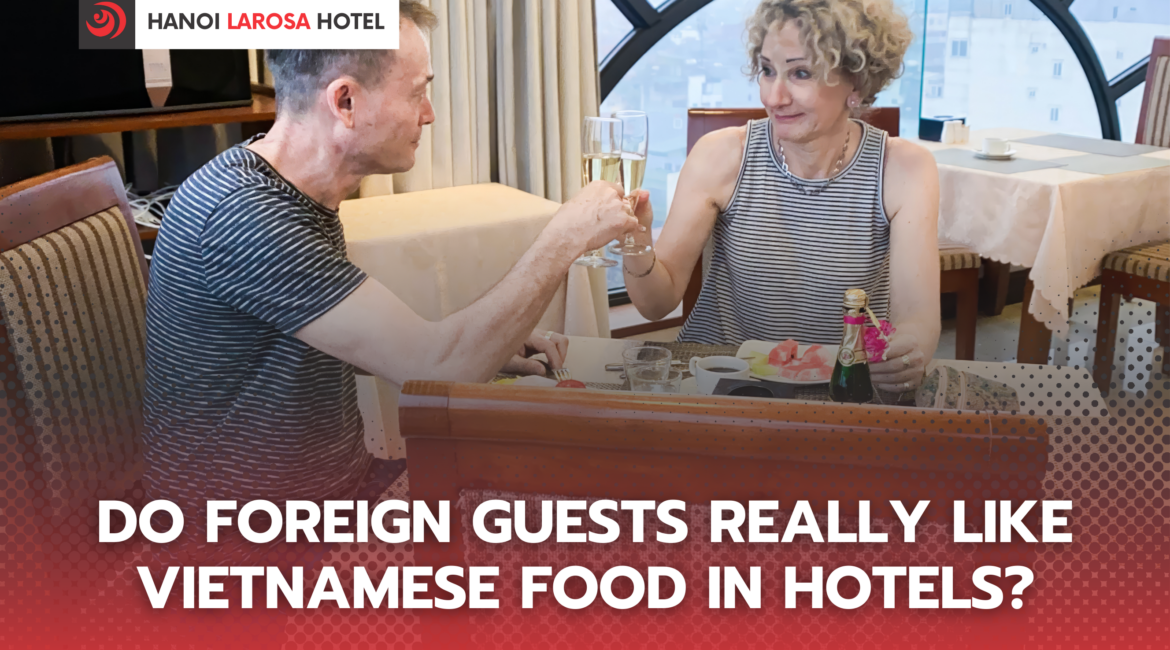
Do Foreign Guests Really Like Vietnamese Food in Hotels?

A Western traveler sits at the breakfast table. Before them is a steaming bowl of Pho. They hesitate for a moment, then carefully take a spoonful of broth. In that instant, their eyes light up – a mix of surprise and delight.
But is this the genuine emotion of every international guest trying Vietnamese food for the first time in a hotel? Or behind those cheerful check-in photos lies a much more complex story of culinary psychology?
Join Hanoi Larosa Hotel as we decode what few people openly discuss: Do foreign guests really enjoy Vietnamese food, and how can hotels truly conquer their palates?
1. The Surprising Truth: Do Foreign Guests Like Vietnamese Food?
When we mention international travelers, especially Western Europeans from France, the UK, or Germany – many assume they’re always eager to dive into Vietnamese street food like Pho, Bun Cha, or Nem Ran (spring rolls).
This is true, but it’s not the whole story.
The reality is: The majority of international guests want to try Vietnamese food, but in a “safe” way. They’re curious about exotic flavors, yet they still need a familiar anchor to avoid culinary culture shock.
According to a study by the Vietnam National Administration of Tourism:
-
85% of international visitors want to eat local food during their journey
-
But 70% of them feel overwhelmed if the menu is too strange or has overpowering smells (like shrimp paste or pure fish sauce)
2. The Psychology Behind Whether Foreign Guests Like Vietnamese Food
Based on real observations and feedback from thousands of guests in Hanoi, three distinct psychological stages emerge:
– Stage 1: “I Want to Explore”
On the first day, guests are excited by everything unfamiliar. They order Pho, call for spring rolls, and might even try exotic dishes if recommended. But if a dish is too “foreign,” they’ll take just one bite and stop.
– Stage 2: “I Need Safety”
After 1-2 days, their stomachs start to “react.” They begin seeking familiar foods like bread, omelets, or cereal. This is a sensitive moment – if the hotel lacks Western options as a “savior,” their overall experience declines.
– Stage 3: “I Want the Perfect Combination”
By the end of their journey, guests have selectively learned to understand and love Vietnamese cuisine. They know which dishes suit them and which to avoid. This is when they truly appreciate hotels offering a sophisticated “fusion menu” – one that preserves the Vietnamese soul while remaining approachable for foreigners.
3. Why Hotels Get the Answer Wrong to “Do Foreign Guests Like Vietnamese Food”
– Mistake 1: Serving “Purely Authentic” Vietnamese Food
Too many spices, excessive herbs, overly strong fish sauce – this overwhelms Western guests from their very first attempt.
– Mistake 2: Completely “Westernizing” Vietnamese Dishes
Beef Pho without herbs, frozen spring roll wrappers – this loses all authenticity, leaving guests disappointed at not experiencing the “real Vietnam.”
– Mistake 3: No Backup Plan
When guests can’t eat Vietnamese food, they have no alternatives. This makes them feel uncared for.
4. The Secret to a “Perfectly Balanced” Menu at Hanoi Larosa Hotel
Understanding these psychological nuances, the culinary team at Hanoi Larosa Hotel has developed a scientifically designed menu strategy – one that conquers travelers’ hearts while optimizing operations for travel partners.
4.1. The 60-30-10 Principle
- 60% Adapted Asian Dishes:
Beef Pho with clear, light, low-fat broth; crispy fried spring rolls with slightly milder filling than the traditional version; fresh herbs served separately, allowing guests to decide whether to add them. - 30% Classic Western Dishes:
Crispy hot baguettes every morning, unsalted butter, cheese, cold cuts, various egg preparations – creating a “safe zone” for those first few days. - 10% Seasonal Local Specialties:
Snail patties, steamed rice rolls, sticky rice – reserved for guests already familiar with or genuinely wanting to explore deeper.
4.2. “Personalized Hot Dishes”
At Larosa, we don’t do mass catering. Each egg order, each bowl of Pho is prepared individually upon request: piping hot, exactly to the guest’s preference – from how well-done they want their eggs to whether they want spring onions or herbs.
4.3 Beverages That “Touch” Culture
Vietnamese Phin coffee is prepared using the traditional method, but our staff always guide guests on how to enjoy it: iced or hot, with or without condensed milk. This transforms a simple cup of coffee into an authentic cultural experience.
5. Conclusion
Do foreign guests really like Vietnamese food in hotels?
The answer is YES – but with one condition: Vietnamese dishes must be prepared and served with sophistication, understanding, and respect for international palates.
At Hanoi Larosa Hotel, we take pride in being a destination where travelers can both discover Vietnamese cuisine and find the comforting familiarity of Western food – a perfect fusion for exploring Hanoi.
Dear Travel Agency Partners interested in accommodation and dining services for international groups, please contact us:
- Phone: (+84) 243 747 1155
-
Email: info@hanoilarosahotel.com
-
Website: www.hanoilarosahotel.com
-
Facebook: www.facebook.com/hanoilarosahotel
-
Address: 36 Nguyen Khuyen, Hanoi, Vietnam.
0 Comments